

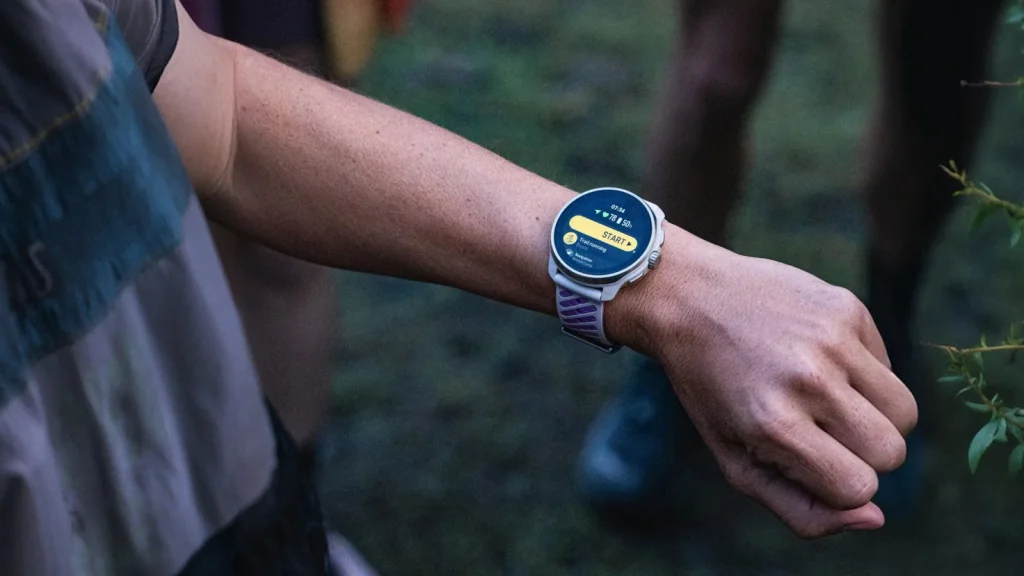
If you have been following my recent deep dives into global tracking databases, you probably already knew this was coming. Over the last few weeks, I’ve been tracking regulatory filings and certification leaks from all over the world. We first spotted the names moving through official channels, as I covered in my exclusive report on the Suunto Race 3 and Race 3S names confirmed via regulatory filings. Shortly after, the trail heated up when I spotted the unreleased Suunto Race 3 and Race 3S in China’s database, followed closely by the Suunto Race 3S (OW265) hitting the FCC as its global launch approached.
Well, the wait is officially over. After days of tracking and endless spec speculation, Suunto has officially taken the wraps off the brand-new Suunto Race 3S.
Suunto skipped the “2S” moniker entirely and brought the “3” generation straight to its compact line. Let’s break down everything you need to know about the new release, what it packs under the hood, and how it stacks up against its predecessor, the popular Suunto Race S.
Display & Build Quality
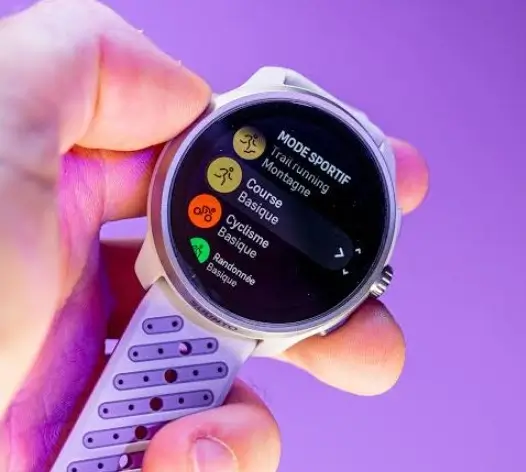
The Suunto Race 3S is built specifically for endurance athletes and runners who want high-end performance hardware in a compact form factor tailored for smaller wrists. Up front, the watch features a gorgeous 1.32-inch LTPS Hybrid AMOLED display with a crisp 466 x 466 resolution. Crucially, Suunto bumped the peak brightness up to a blazing 2,000 nits—more than three times brighter than the previous generation—making maps and stats vastly easier to read under glaring sunlight. This panel is protected beneath scratch-resistant sapphire crystal glass and housed inside a lightweight titanium bezel that gives the watch a rugged yet premium feel while keeping total weight down to 56g with strap.
Performance & Onboard Storage
Under the hood, the device is powered by the newer Ambiq Apollo 510 processor, which makes menu navigation and map rendering feel noticeably snappier than before. Storage has also been doubled from 32GB to 64GB, giving you plenty of room for free worldwide offline maps complete with contour lines, street names, and points of interest, as well as offline music playback.
GPS Accuracy & Bio-Sensors
For positioning, the Race 3S comes equipped with dual-band (L1 + L5) GPS supporting all major satellite systems simultaneously to ensure pinpoint accuracy even under dense tree cover or deep in urban canyons. Health and fitness tracking have also seen a solid hardware bump. The optical heart rate sensor has been completely overhauled, now utilizing 6 LEDs and 4 photodetectors positioned behind a 2.5D curved glass for better tracking stability during intense interval training or wet conditions.
Price and Availability
The Suunto Race 3S is priced at £435 / $599 / €499.
It launches on October 15, 2026, for the UK, Europe, and China, followed by a wider rollout in North America and Asia-Pacific on October 29, 2026. It is available in three distinct colorways: Titanium Black, Titanium Feather, and Titanium Orchid.
Suunto Race 3S vs. Suunto Race S: What’s the Difference?
If you already own the Suunto Race S, or are trying to decide between the two as prices shift, here is how the new Race 3S directly compares:
| Specification | Suunto Race 3S | Suunto Race S |
| Case Size | 46 x 46 x 11.4 mm | 45 x 45 x 11.4 mm |
| Weight (with strap) | 56 g | 53 g (Titanium) |
| Front Glass | Sapphire Crystal | Corning Gorilla Glass |
| Bezel Material | Titanium (Standard on all models) | Titanium or Stainless Steel |
| Display Brightness | 2,000 nits | 600 nits |
| Processor | Ambiq Apollo 510 | Apollo 4 Plus |
| Optical HR Sensor | 6 LEDs + 4 Photodiodes | 4 LEDs + 2 Photodiodes |
| Dual-Band GPS Battery | Up to 38 hours | Up to 30 hours |
| Daily Use Battery | Up to 12 days | Up to 9 days |
| Storage | 64 GB | 32 GB |
The Verdict on the Upgrade
The changes here aren’t just minor firmware bumps; Suunto has overhauled the hardware core. The jump from 600 nits to 2,000 nits makes the AMOLED screen genuinely usable under harsh midday sun. Coupling that with standard sapphire glass (which previously required paying extra on select Race S models), an upgraded heart rate module, and an extra 8 hours of dual-band GPS endurance addresses almost every minor hardware critique leveled at the first-generation compact model.
If you are rocking a Race S and your battery life or screen legibility in direct sunlight has been completely fine, you can easily stick with what you have. But if you’re an ultrarunner needing that extra GPS buffer, or you’ve been waiting for a truly bright, rugged compact daily driver with offline music storage, the Race 3S shapes up to be a compelling evolution of Suunto’s lightweight lineup.
Also Read: Suunto Run 2, Race 3, and Race 3S Surface in UAE’s TDRA as Global Launch Nears

